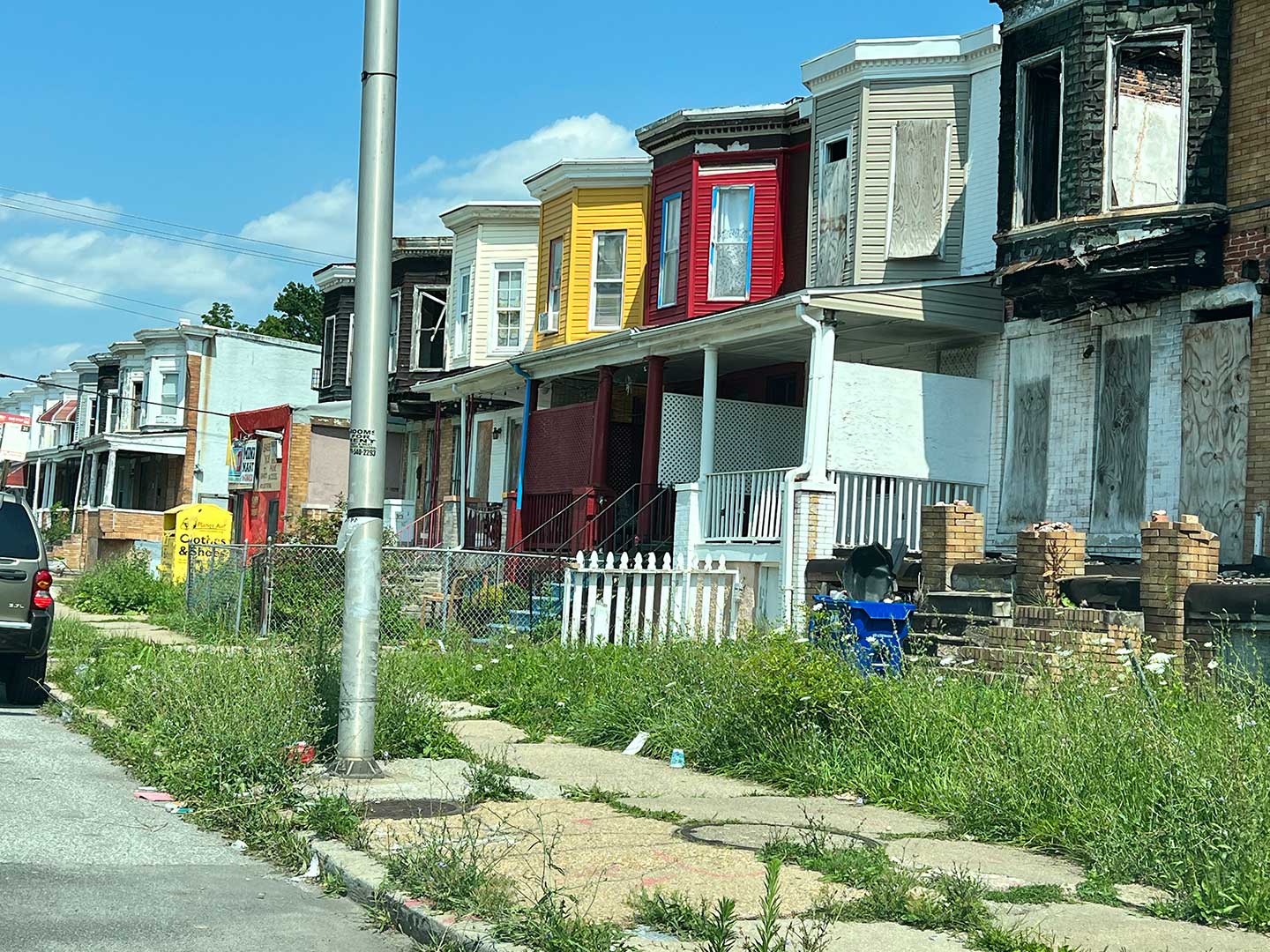
Baltimore had spent decades working to reverse the effects of a prolonged period of population and household loss. The result, in many neighborhoods, was weak market conditions and persistent vacancy. Most interventions to date hadn’t reached the hardest-hit areas: concentrations of vacancy in low-demand, high-poverty neighborhoods that accounted for almost 90% of all vacant structures citywide. As new public and philanthropic funding became available, nonprofit organizations ReBUILD Metro and BUILD, along with their partners, wanted to put that funding toward smart, targeted bets rather than spreading it thin. They needed to know where investment would actually work, and why so much of it hadn’t before.
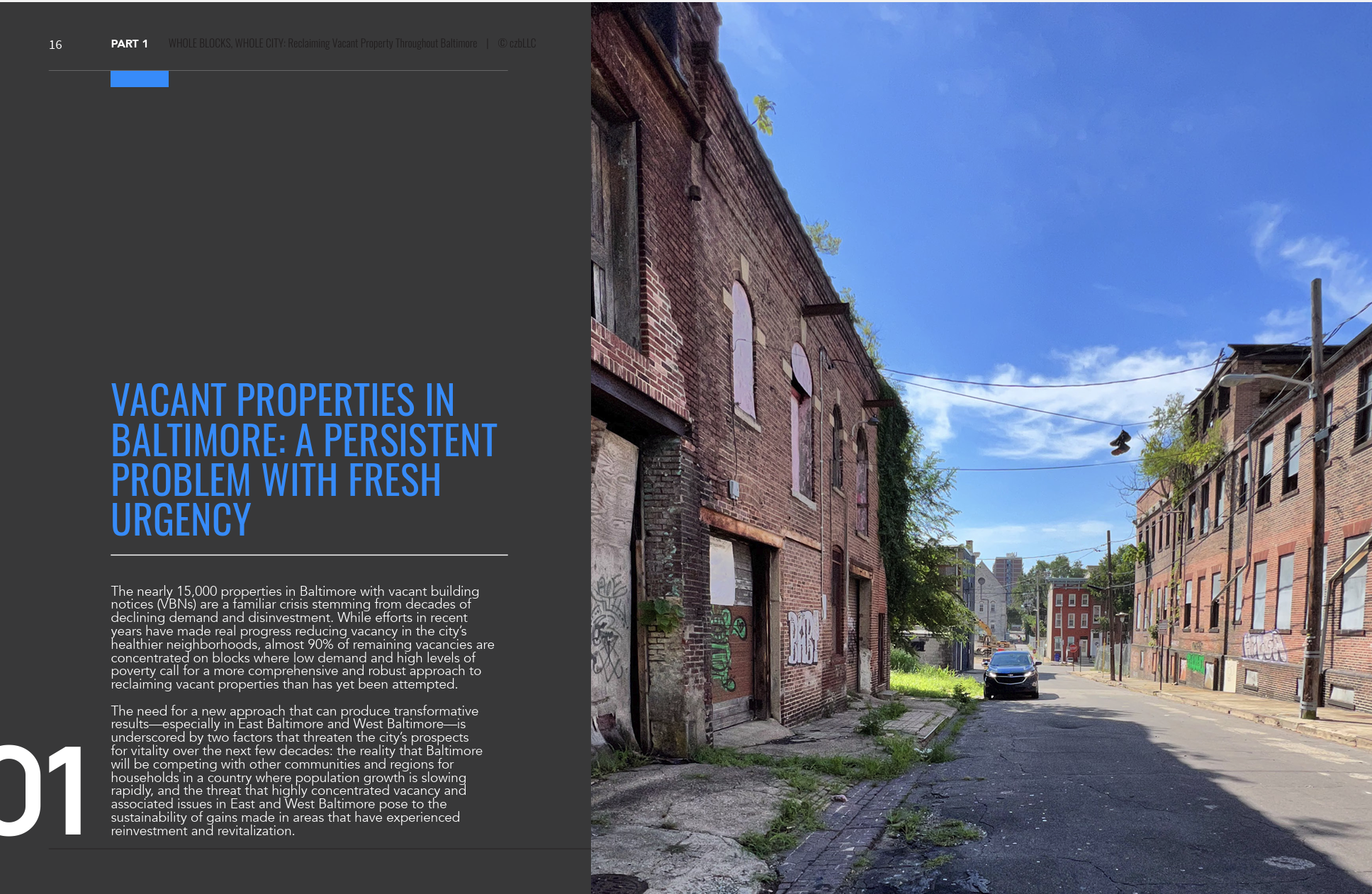
Vacancy in Baltimore wasn’t one citywide problem; it was many block-level problems, each shaped by highly localized market dynamics. CZB’s analysis found that vacancy itself wasn’t the right target. Roughly 15,000 buildings were identified by the City as vacant in 2022, a number that had been declining but remained stubbornly concentrated in the same struggling areas. Solving vacancy meant treating the health of a block, not the count of empty buildings on it, as the real unit of change.
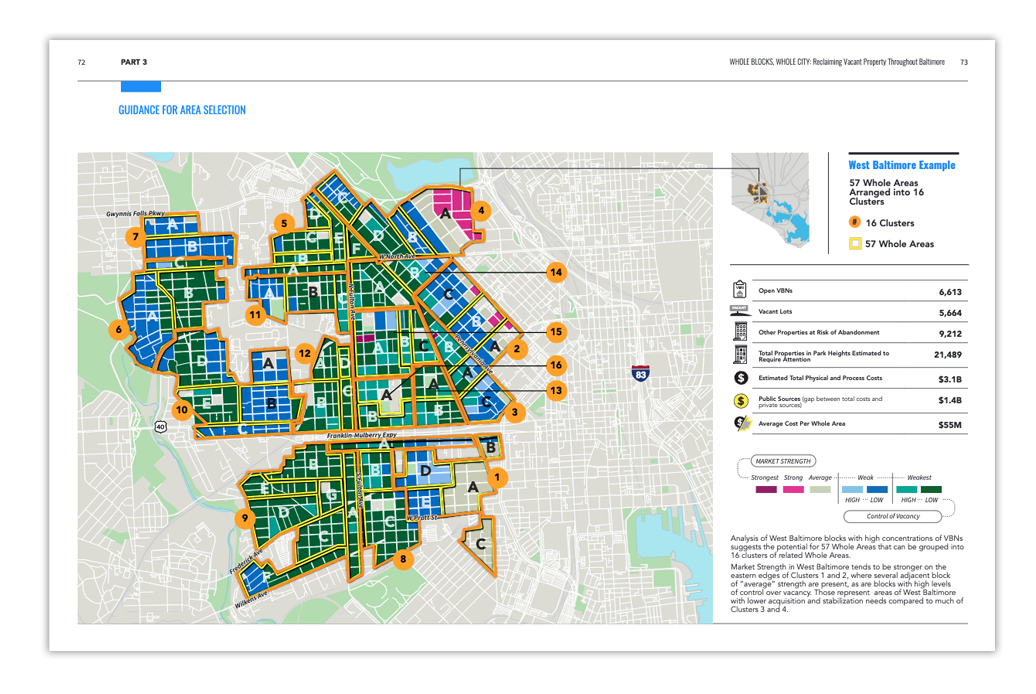
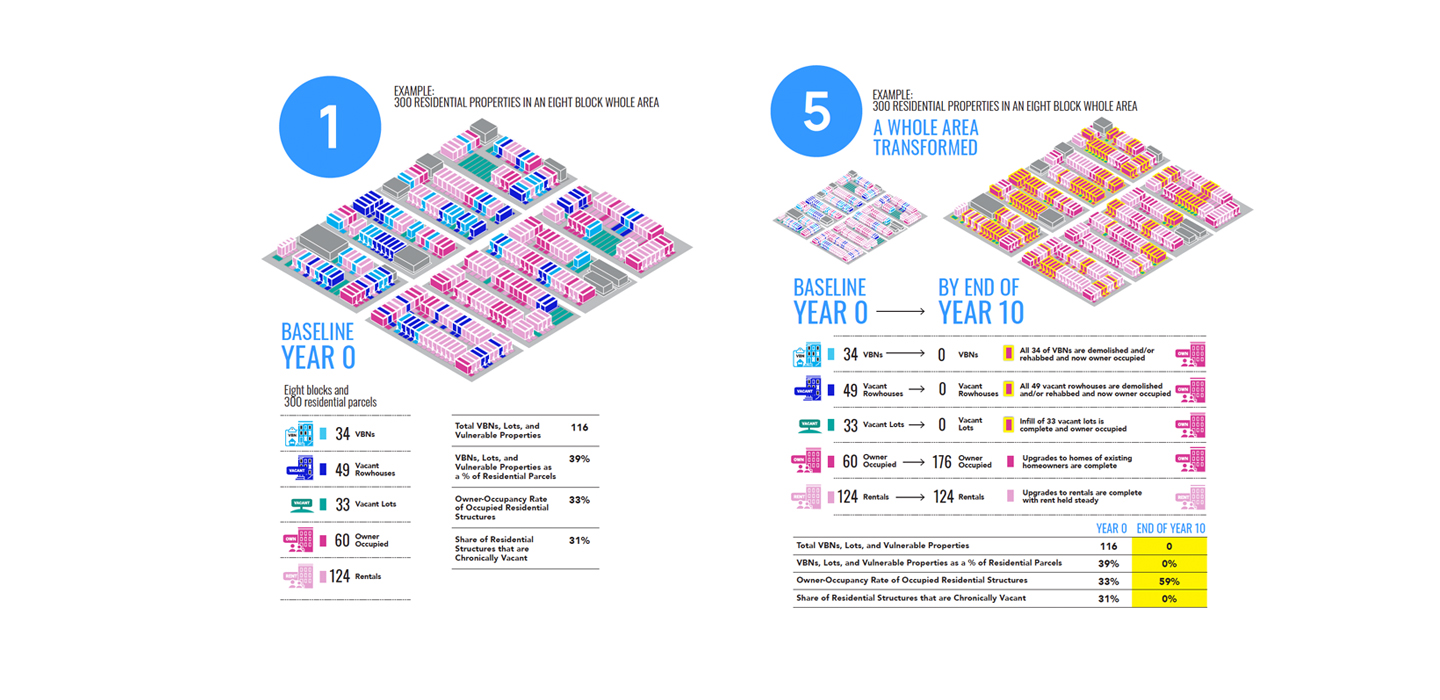
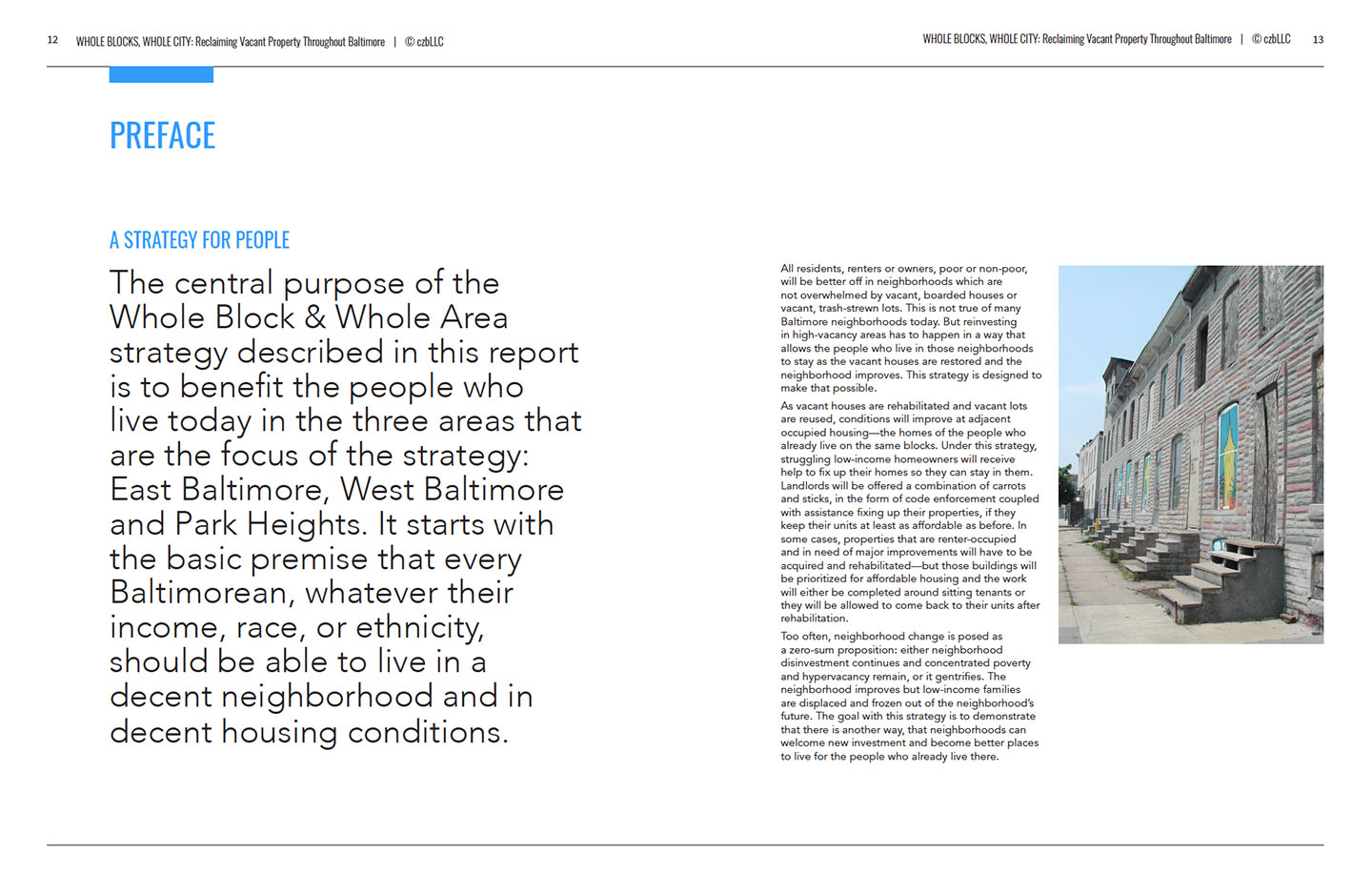
Commissioned by ReBUILD Metro and BUILD, with support from the Abell Foundation and the Robert W. Deutsch Foundation, CZB conducted a sweeping study of Baltimore’s vacant and abandoned building issue. The work explored the dynamics of vacancy and disinvestment across the city’s neighborhoods and identified a path forward focused on investing in groups of blocks rather than individual properties, aiming to deliver real results in the areas where vacancy had proven most stubborn. We pinpointed a specific sequence for targeted groups of blocks: control vacant and distressed properties, secure and stabilize them, use early investments to create an atmosphere of promise, and then proceed with rehab, infill, and reinvestment.
CZB’s work with the City of Baltimore led to what is now the city’s and state’s approach to dealing with large-scale distress: a whole-block, whole-area strategy.
The resulting strategy, completed in January 2023, called for robust investment in the health of groups of blocks and a fundamental shift away from treating vacancy itself as the problem to solve. It gave ReBUILD Metro, BUILD, and their funding partners a clearer, evidence-based path to direct new public and philanthropic dollars toward the neighborhoods where they could do the most good.

Reach out for more information about this project or to see the final document.
Know someone who would find this useful? Send it their way.